
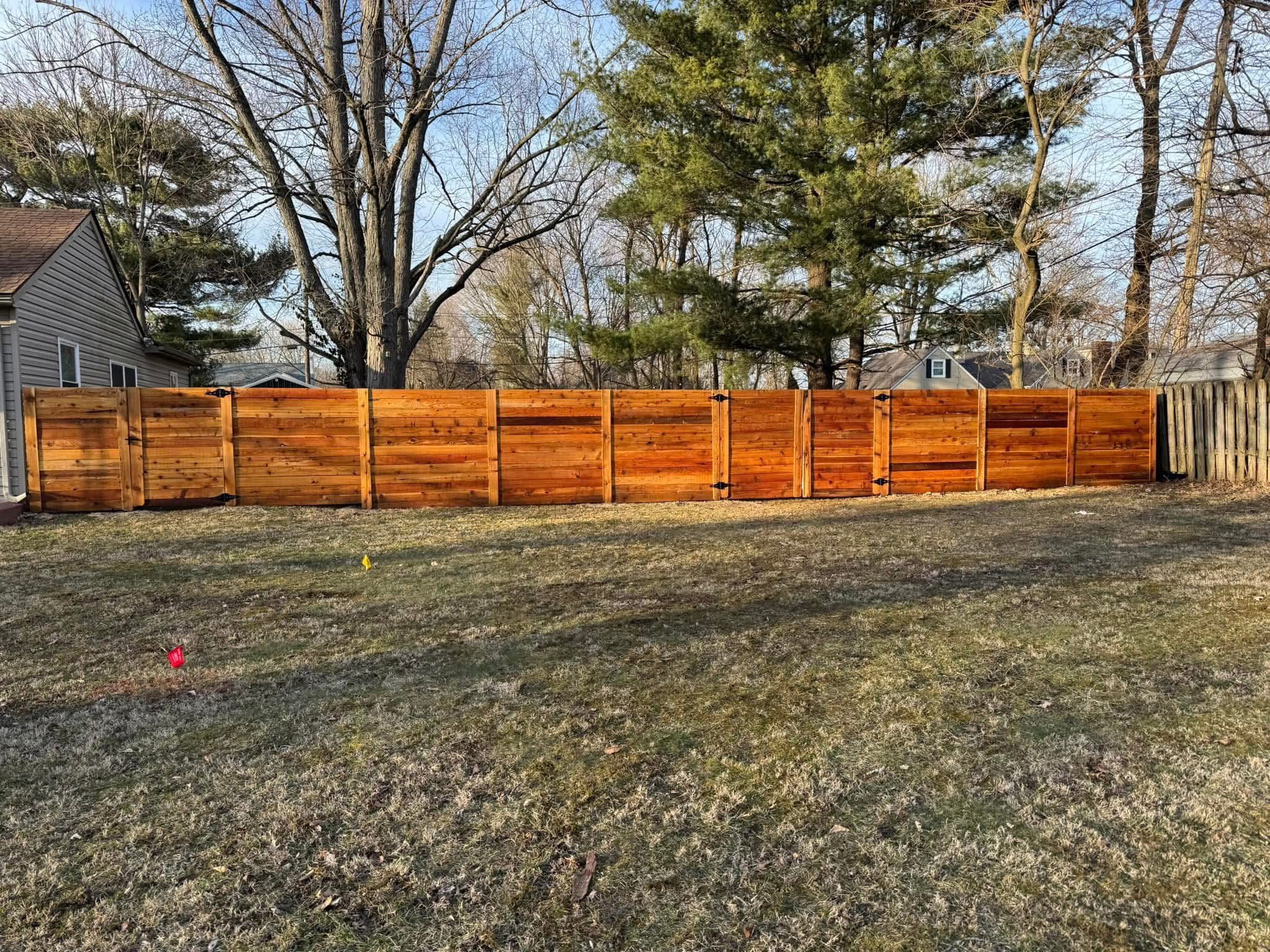
Wood Fence Installation in Indianapolis
Pressure-treated pine and cedar privacy, shadowbox and picket fences built for homes and businesses within 50 miles of Indianapolis 46256.
Wood is the fence most homeowners picture first. It gives a solid, warm look that blends into a yard, takes stain and paint so the color is yours to set, and builds into every style from a full privacy wall to a low front-yard picket. Within 50 miles of Indianapolis 46256, we install wood fences for homes and the same fences are available for businesses. Free estimates mean we come look at the lot before anyone commits to a style or a height.
Styles
Dog-ear privacy. The standard solid-board fence with the top of each picket cut at an angle. It blocks the view completely and is the most common backyard fence in central Indiana.
Board-on-board. Pickets overlap on both sides of the rails so there is no gap to see through, even as the wood dries and shrinks. It looks the same from either side.
Shadowbox. Pickets alternate on opposite sides of the rails. It lets air pass through and can be seen through at an angle, but it still reads as a privacy fence from straight on.
Picket. A shorter, open fence for a front yard or a garden edge. It frames the house without closing it off.
Horizontal board. The boards run sideways for a modern, clean-lined look. It is a striking style but takes more from the fence structure to hold its lines.
Three- or four-rail ranch. An open post-and-rail fence for a large lot or a pasture edge. It marks a boundary without blocking anything.
Pine or Cedar
Pressure-treated pine is the default for most wood fences in this area. The treatment resists rot and insects at the ground line, where a fence fails first. It starts with a green tint that fades to a honey brown over the first season, then continues to grey if left alone.
Cedar carries its own natural oils that resist rot without pressure treatment. It weathers to a soft silver-grey on its own and holds its shape well. Cedar costs more up front than pine, and it still benefits from sealing if you want to slow the weathering. Neither wood is maintenance-free. Both need staining or sealing on a schedule to hold their color and push back the rot.
What Indiana Weather Does to Wood
Indianapolis averages 43.63 inches of rain and 25.5 inches of snow a year. Much of central Indiana sits on clay-rich glacial till with a seasonally high water table in the wet months. Wood soaks up that moisture, swells in the wet season, and shrinks when it dries. The cycle opens gaps between boards, loosens fasteners, and is what makes a wood fence lean over time.
At the ground line, where the post meets wet clay, rot sets in first. Staining or sealing slows it by keeping water out of the wood grain, but no finish stops it forever. A fence left bare will grey within a year or two and rot at the ground line sooner than one that is sealed. There is no single number for how long a wood fence lasts in this ground; it depends on the wood, the finish, the drainage, and how much water sits around the posts.
Height and the Good Side
In Indianapolis dwelling districts, a front yard is capped at 3.5 feet, or 4 feet if the fence is 30% opacity or less. Side and rear yards are capped at 6 feet, and posts may run one foot higher than the maximum fence height. For more privacy than 6 feet allows, see the privacy fence page for the heights that apply.
Some central Indiana towns require the finished side of a fence to face the neighboring property. The rule differs from town to town, so check the fence permit guide before you order. For repairs to an existing wood fence, see fence repair. To talk through a project, call (317) 775-2452 or use the contact page.
Wood Fence Questions
What wood fence styles are available?
Dog-ear privacy, board-on-board, shadowbox, picket, horizontal board, and three- or four-rail ranch fence. Each has a different look and a different level of openness.
Pine or cedar - which is better?
Pressure-treated pine is the common choice for cost and rot resistance. Cedar weathers to a soft grey on its own and needs less chemical treatment, but it costs more up front. Both need upkeep to stay looking good.
How tall can a wood fence be in Indianapolis?
In Indianapolis dwelling districts, a front yard is capped at 3.5 feet, or 4 feet if the fence is 30% opacity or less. Side and rear yards are capped at 6 feet. Posts may run one foot higher than the maximum.
Does the finished side need to face the neighbor?
Some towns require the finished side of the fence to face the neighboring property. The rule differs from town to town, so check the fence permit guide for your town before you build.
What about fence repair?
Leaning posts, damaged panels, and gate fixes are all repairable. See the fence repair page for what we handle. You can also call (317) 775-2452 or send the form at the top of this page.
Where We Work
We build and repair fences for homes and businesses within about 50 miles of Indianapolis 46256.