
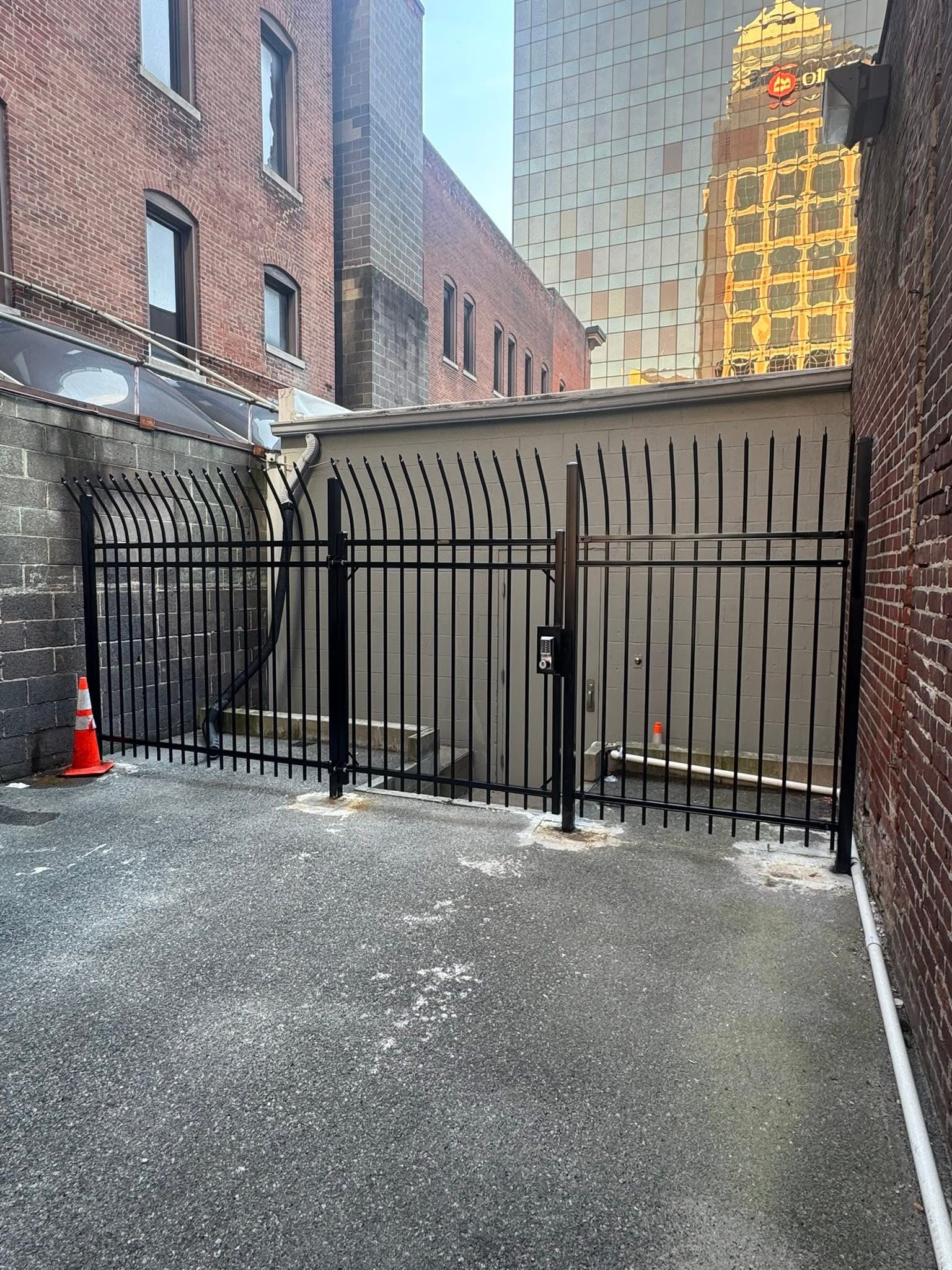
Commercial Aluminum Fence in Indianapolis
Commercial-grade aluminum fencing and secure entry gates for offices, retail, apartments and commercial lots within 50 miles of Indianapolis 46256.
Aluminum gives a commercial lot the clean look of a painted picket fence without the upkeep or the rust. It is the fence you put where customers and tenants see it, on a pool deck, a patio, or a frontage where chain link is not allowed. Within 50 miles of Indianapolis 46256, we install commercial aluminum for offices, retail sites, apartment communities, and pools. The same company also fences homes. Free estimates mean we look at the lot and the code before anyone picks a height or a style.
Where Aluminum Fits
Frontages. An open aluminum picket along a street gives a finished edge where the fence is the first thing a visitor sees.
Entries. Around a main entry or a sign, aluminum frames the entrance without closing it off.
Apartment and community pools. A pool barrier has to meet the state code, and aluminum keeps the view while it does it. See the pool fence page for the barrier rules.
Patios. Around a patio or a common outdoor area, aluminum gives a light enclosure that does not feel like a wall.
Anywhere the fence is seen by customers or tenants, aluminum is the fence that looks finished and asks for the least in return.
Front Yards on Commercial Lots
In Indianapolis, a front-yard fence on a commercial lot is capped at 3.5 feet in C-1, C-3 and C-4, 5 feet in C-5, and 6 feet in C-7. Where chain link is not allowed along the street on commercial and mixed-use property, an open aluminum fence is the usual answer. It meets the frontage rule, keeps the view, and does not trigger the coating and slat limits that chain link does.
Every other town writes its own rules, so check the fence permit guide for the town your lot is in before you plan a frontage fence.
Aluminum or Steel
Aluminum will not rust and is lighter, which makes it the pick for wet settings and pool yards. It trades some strength for that corrosion resistance.
Steel ornamental is stronger, which is why it gets chosen for hard perimeters and high-traffic entries where a fence takes knocks. See the commercial ornamental fence page for the steel option.
Community and Commercial Pools
A backyard pool barrier and a community or commercial pool barrier are not the same thing. Public and semi-public pools are regulated separately, and the barrier has to meet the rule that applies to that pool. The state residential code sets a minimum of four feet for a backyard pool, but a community pool may carry a taller or different requirement from the town or the health department. Do not assume the residential number is the rule for a commercial pool.
To scope a pool barrier, call (317) 775-2452 or send the form at the top of this page. You can also reach us through the contact page. See the related commercial ornamental fence and custom gates pages for more.
Commercial Aluminum Questions
Is aluminum allowed in the front yard of a commercial lot in Indianapolis?
An open aluminum fence is the usual answer where chain link is not allowed along the street. In C-1, C-3 and C-4 the front yard is capped at 3.5 feet, 5 feet in C-5, and 6 feet in C-7. See the fence permit guide for the full list.
Will an aluminum fence rust?
Aluminum will not rust, which is one reason it is chosen for pool yards and frontages that get wet. It is lighter than steel, so it trades some strength for that corrosion resistance.
Is a community pool barrier different from a backyard pool barrier?
Public and semi-public pools are regulated separately from backyard pools. The barrier has to meet the rule that applies to that pool. Do not assume the state's four-foot residential minimum is the rule for a community pool.
Aluminum or steel for a commercial fence?
Aluminum will not rust and is lighter; steel ornamental is stronger. See the commercial ornamental fence page for the steel option.
Can businesses get the same aluminum fence?
Yes. The same company also fences homes. See the residential fencing page for the full list.
Where We Work
We build and repair fences for homes and businesses within about 50 miles of Indianapolis 46256.