
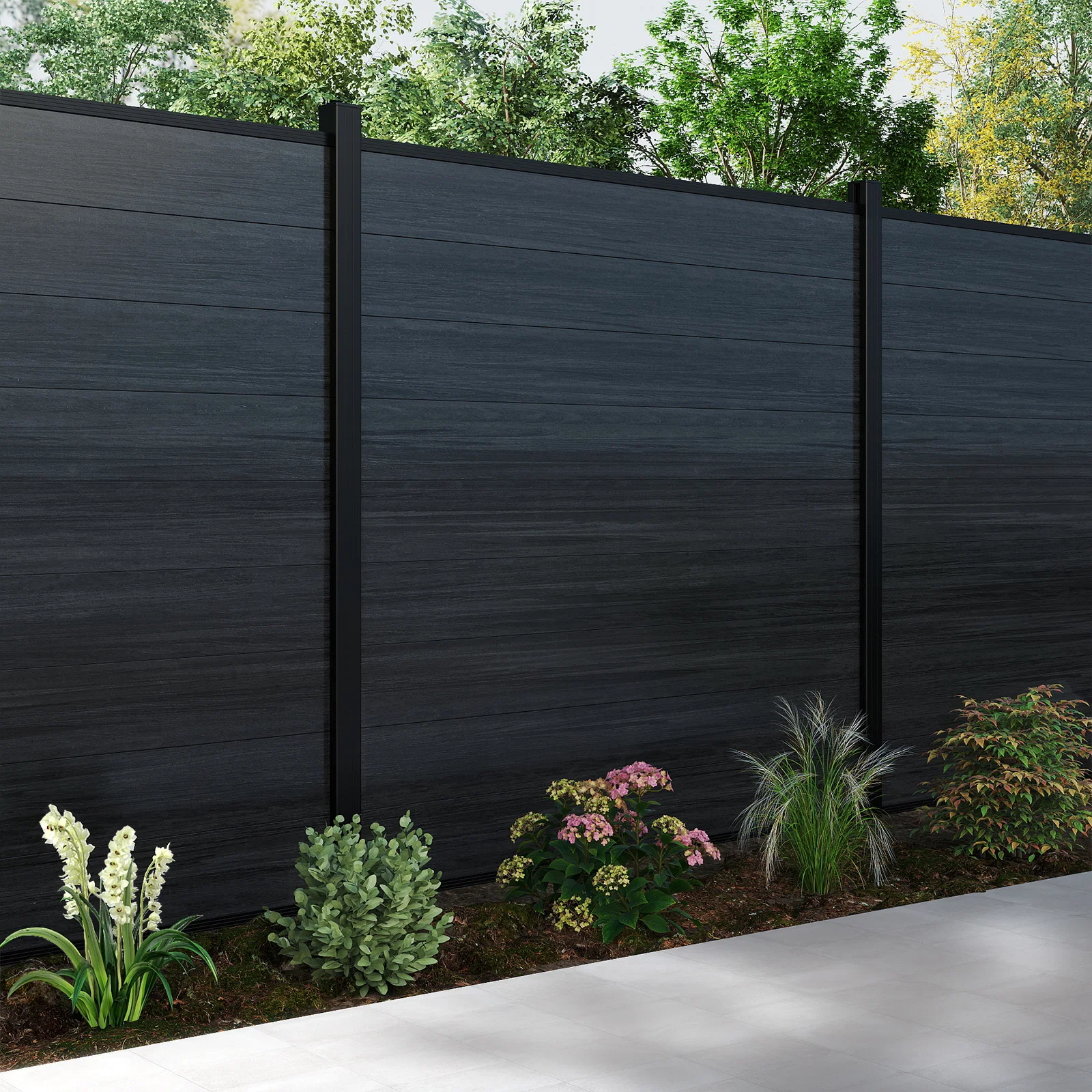
Composite Fence Installation in Indianapolis
Composite privacy fences with the look of wood and zero staining within 50 miles of Indianapolis 46256.
Composite gives the look of wood without the staining cycle. The boards are made from wood fiber and plastic, built into solid privacy panels that do not rot, do not take stain, and hold their color through the seasons. Within 50 miles of Indianapolis 46256, we install composite fences for homes and the same fences are available for businesses. Free estimates mean we check the lot and the town rules before we quote.
What Composite Is
Composite fence boards are a mix of wood fiber and plastic, extruded into solid profiles that lock together as a privacy panel. The wood fiber gives the grain and the tone that reads as natural wood from a distance. The plastic binds it so it does not split, rot, or take in water the way a solid wood board does.
Because the color runs through the material, there is no stain or paint to apply and no refinishing cycle to keep up. A composite fence washes down with a hose and holds its look for years. The trade is a higher up-front cost and a narrower range of colors than wood, which takes any stain you choose.
Composite, Wood or Vinyl
| Material | Look | Upkeep | Up-front cost | Repairability |
|---|---|---|---|---|
| Wood | Natural grain | Stain or seal on a cycle | Lower | Patch or replace a board |
| Vinyl | Smooth, uniform | Wash with a hose | Middle | Replace a section |
| Composite | Wood-tone grain | Wash with a hose | Higher | Replace a board |
Wood costs the least up front and asks for the most upkeep. Vinyl costs more than wood, needs no staining, and does not read as wood. Composite costs the most up front, gives the wood look, and needs no staining. For the wood page, see wood fences. For the vinyl page, see vinyl fences.
Weight
Composite panels are heavy. A solid board of wood fiber and plastic weighs more than a vinyl panel of the same size, so the posts and footings carry more load. The frost depth for footings in Marion County and the counties around it is 30 inches under the Indiana Residential Code. Much of central Indiana sits on clay-rich glacial till with a seasonally high water table in the wet months, and that ground freezes and pushes.
A heavy panel on a shallow post in wet clay is a recipe for a fence that leans within a season or two. Post depth and drainage carry the load, not the material on top. See the fence permit guide for the heights that apply in your town. To start a project, call (317) 775-2452 or use the contact page.
Who It Suits
Composite is the right pick for someone who wants the wood look and never wants to stain a fence again. If refinishing a fence every few years is not something you want on your list, composite gives you the grain and the privacy without it. If the up-front cost is the deciding factor, wood does the same job for less and asks for the upkeep. If the look of wood does not matter, vinyl gives the low upkeep for less than composite costs.
Composite Fence Questions
What is composite fencing made of?
Boards made from wood fiber and plastic, formed into solid privacy panels. The mix gives the look of wood without the staining and sealing cycle.
How does composite compare to wood and vinyl?
Composite has the wood look without upkeep, but it costs more up front than both wood and vinyl, and the color choice is narrower. Wood costs the least up front and needs the most upkeep. Vinyl costs less than composite, needs no staining, but does not read as wood.
Does composite fencing need staining?
No. The color runs through the material. It does not take stain or paint, so there is no refinishing cycle. That is the main reason people pick it over wood.
How tall can a composite fence be?
In Indianapolis dwelling districts, side and rear yards are capped at 6 feet and front yards at 3.5 feet, or 4 feet at 30% opacity or less. Other towns differ, so check the fence permit guide for your town.
Can businesses get composite fencing?
Yes. Composite fences are available for commercial properties too. See the commercial fencing page for the full list.
Where We Work
We build and repair fences for homes and businesses within about 50 miles of Indianapolis 46256.